Direct answer
Who does digital marketing for land and agriculture businesses in College Station, TX?
Barbed Wire Studios builds websites and lead systems for land and agriculture businesses in College Station, Texas, a market anchored by Texas A&M University. The work covers local SEO, web design, paid advertising, hosting, automation, and analytics. The studio is based in North Zulch, Texas, and covers fourteen markets across the state.
land & agriculture · College Station
Two buyers share this county, and they do not shop the same way.
A land or agricultural business headquartered in Brazos County sells to two audiences that barely overlap. One runs formal procurement through Texas A&M or a university-adjacent organization and wants documents before it wants a pitch. The other owns acreage, pays from an operating account, and decides after one phone call.
The Research Valley corridor also means your market refreshes. A large share of this population turns over every few years, so the standing you built with faculty, staff, and acreage owners in one cycle does not automatically carry into the next. Search is how the new arrivals find you, because there is nobody left to ask.
Land itself is the other complication. Buyers looking for property near College Station are often searching from Houston, Austin, or Dallas, roughly ninety miles out in each direction. The page they land on is the first showing, and it has to do the work a drive-by used to do.
Services for College Station Land & Agriculture
Build the pieces that carry the load.
Each service below is adapted for the local market, competition, and operating reality.
SEO & Local Dominance
Own the map pack and show up when high-intent customers across Texas are actively looking for your services.
SEO in College Station ↗02◫Website Design & Development
Conversion-focused, mobile-ready sites with a distinctive point of view—built to turn attention into qualified leads.
Website in College Station ↗03↗Paid Advertising
Targeted search and social campaigns with every dollar tracked, every call counted, and every weak spot tightened.
Paid in College Station ↗04◇Hosting & Site Care
Fast, secure, hands-off management that keeps your digital storefront healthy while you run the business.
Hosting in College Station ↗05⟳Systems & Automation
Connect your tools, automate repetitive work, and use practical AI to lower operating costs without losing the human touch.
Systems in College Station ↗06⌁Analytics & Reporting
Plain-English reporting focused on leads, revenue, and the next move—not vanity metrics or decorative charts.
Analytics in College Station ↗The industry lens
Specific proof. Clearer fit.
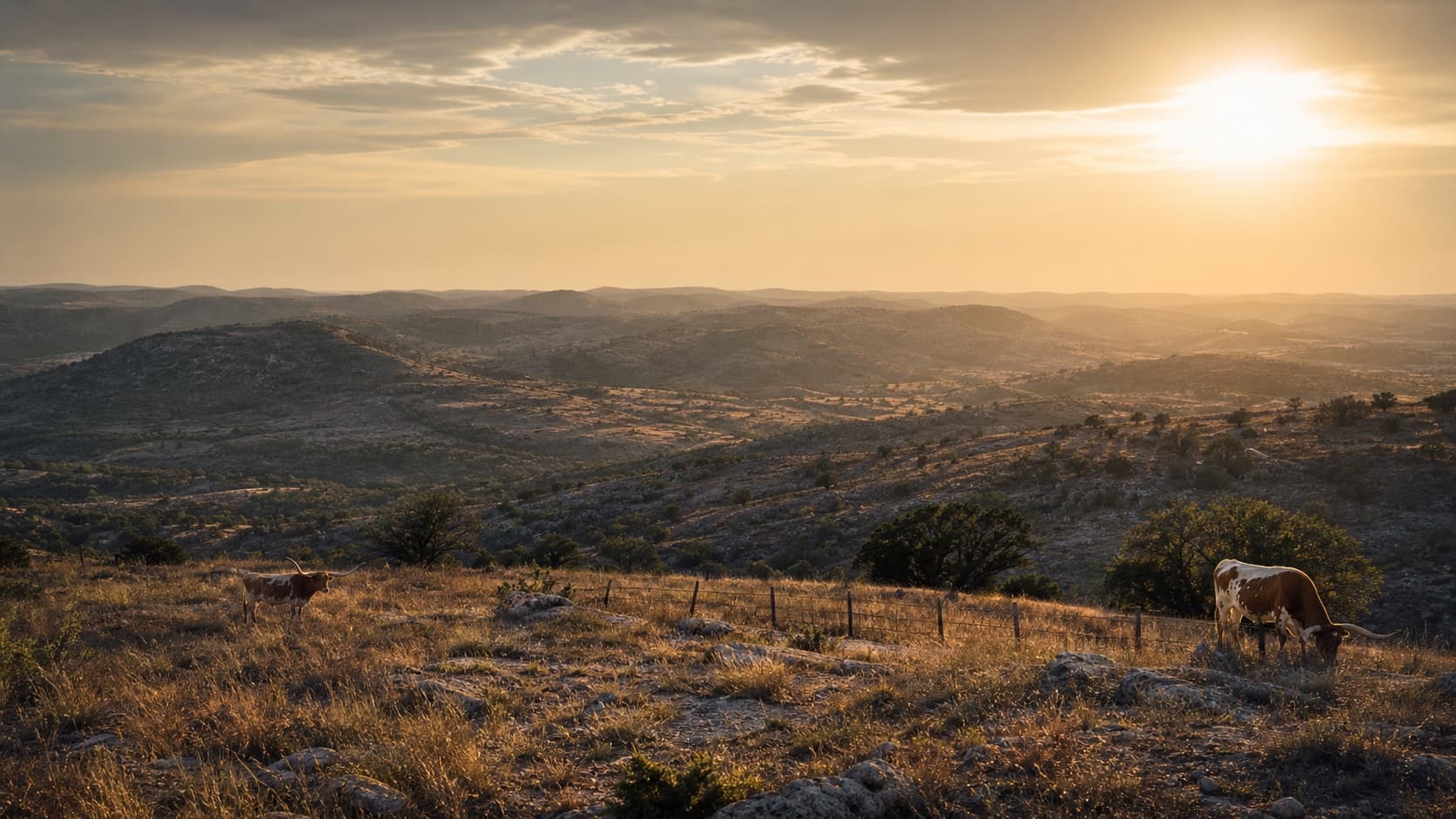
Photography and specific language show the scale and character of the work.
The split buying character is the whole strategic problem. Institutional purchasing wants documented process, insurance, references, and a paper trail, and it rewards whoever is easiest to justify. Landowners and ag operators want to know you understand a fence line and can be there Thursday. Write both, and label them clearly so neither audience lands on the wrong page.
Timing follows the academic calendar more than people expect. Hiring cycles, move weeks, home football weekends, and the deep summer trough shape when the phone rings even for a business that never touches a student. Plan spend and content around those swings instead of a flat monthly number.
- 01
Separate the two books
Split institutional and landowner demand into distinct paths before writing a word.
- 02
Map the ninety-mile buyer
Build for people searching Brazos County land from Houston, Austin, or Dallas.
- 03
Publish the proof each side needs
Bid-ready documentation on one track, field photographs and plain pricing on the other.
- 04
Ride the calendar
Push spend into the hiring and move cycles, throttle back through the summer trough.
Who the system can support
For ag and land companies selling to a campus and a county at the same time.
Good fit: ranch and land brokerages working Brazos County, equipment and supply dealers with a university-adjacent account list, agricultural brands that need a credible face for institutional buyers, and land-service crews whose work starts where the subdivisions end.
Poor fit: an operation that only wants the university contract and no retail side, or a landowner-only business that would rather not answer a procurement questionnaire. Either one can be built well. Pretending a single system serves both is where the money goes missing.
Industry questions
Industry FAQs
Our land listings get views from Houston but almost no calls. What is wrong?
Usually the listing does not survive the questions a distant buyer asks before committing a Saturday. Acreage, road frontage, water, fencing condition, drive time from the metro, and enough photographs to picture the place. A buyer ninety miles out is deciding whether to make the trip, not whether to buy. Give them what a walk-through would.
Does the university market actually matter for an agricultural supplier?
It matters if you can tolerate the process. Institution-adjacent purchasing is slower and more documented, but it does not evaporate in a bad year and it tends to renew. The realistic approach is a separate track with its own materials, funded by your retail work, rather than a pivot that leaves the fast side unattended.
Should we build separate sites for the institutional side and the landowner side?
One site, two clearly separate paths that diverge in the first click. Shared branding keeps the trust intact, while separate pages let each buyer read something written for them. What fails is a blended homepage trying to sound bid-ready and neighborly in the same paragraph, which convinces neither reader.
Ready to claim more territory?